

Paper Accepted at IEEE IPDPS '22 (a Listed Outstanding Conference)
Files

A paper titled 'DeNOVA: Deduplication Extended NOVA File System', written by Kwon Hyung-jun (undergraduate; supervisor: Professor Kim Young-jae) of the Department of Computer Science & Engineering, has been accepted for publication at the IEEE International Parallel & Distributed Processing Symposium (IPDPS '22).
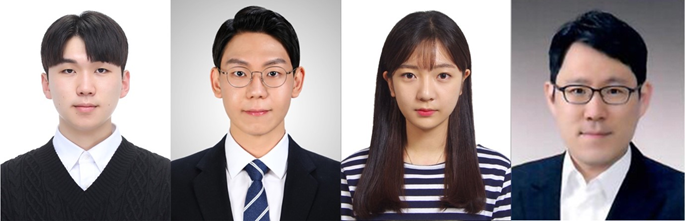
▲ From left: Kwon Hyung-jun (undergraduate, 8th semester; supervisor: Professor Kim Young-jae), Cho Yong-hyun (master's, 1st semester; supervisor: Professor Kim Young-jae),
Park Yeo-hyun (master's, 1st semester; supervisor: Professor Kim Young-jae), Professor Kim Young-jae (supervisor)
IEEE IPDPS is an international conference for presenting and sharing the latest research not only in distributed computing but across many areas of computer science. IPDPS is listed among the outstanding international conferences in CS under the BK21 Plus programme (adjusted IF=2) and is also listed among the KIISE outstanding software conferences.
The research: This work demonstrates experimentally that inline deduplication is unsuited to NVM file systems that take account of the characteristics of the recently emerging NVDIMM (non-volatile DIMM) technology, and proposes offline deduplication that accounts for NVDIMM's characteristics as an alternative. This makes it possible to provide a deduplication service while degrading the write performance of an existing NVM file system by only about 1%.
Figure 1 gives an overall overview of DeNOVA. Offline deduplication detects duplicate data asynchronously after the data has been written to storage and performs deduplication. To this end there is a deduplication daemon running asynchronously in the background and a deduplication work queue for identifying data subject to deduplication.
NVDIMM offers write speeds comparable with DRAM while being non-volatile like an SSD. It must therefore be able to handle consistency problems if a system failure occurs during deduplication. DeNOVA is designed to account for consistency in every case through the deduplication process shown in Figure 2.
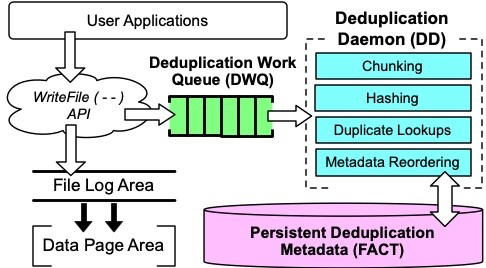
Figure 1. Overall overview of DeNOVA
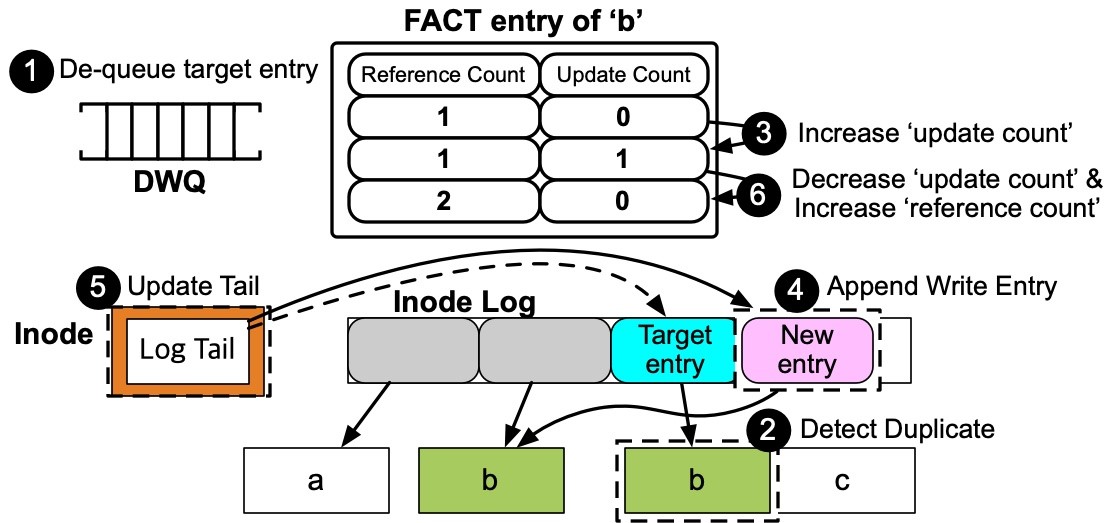
Figure 2. The deduplication process in DeNOVA
Paper link: https://discos.sogang.ac.kr/file/2022/intl_conf/IPDPS_2022_J_Kwon.pdf
Reflections on what was learned through the research internship / research project: Kwon Hyung-jun, currently an eighth-semester undergraduate in the Department of Computer Science & Engineering, shared the following reflections on the research.