

RESEARCH
AI & Machine Learning
"Machines that see, understand and reason"
Machine learning has become the common language of computer science. The labs in this area dig into the principles of learning algorithms themselves while studying how three very different signals - language, speech and vision - can be turned into intelligence.
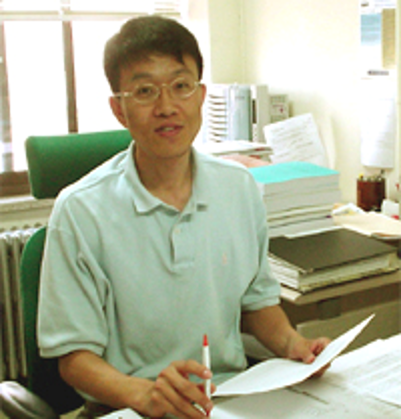 기계학습 연구실 Machine Learning LabPrincipal Investigator | Jihoon Yang Website
Intelligent agents that improve themselves through learning
The Machine Learning Laboratory is interested in building intelligent learning agents that act better as experience accumulates. Working from the foundations of learning in statistics, information theory and linguistics, the laboratory develops new algorithms for deep learning and reinforcement learning. In data mining it designs and implements algorithms and software for acquiring and deriving knowledge, and validates them across applications such as pattern recognition, bioinformatics, recommender systems, and web and social networks.
 금융기계학습 연구실 Financial Machine Learning LabPrincipal Investigator | Saejoon Kim Website
Financial economics seen anew through deep learning
The Financial Machine Learning Laboratory sits where machine learning meets quantitative finance. It applies to financial market data the machine learning techniques that analyse material and infer new information, and studies how to construct portfolios and derivatives that satisfy a range of conditions. Its weight lies in fundamental research: understanding why some assets return more than others, interpreting why and how the various capabilities of deep learning work, and improving their performance.
 청각지능 연구실 Auditory Intelligence LabPrincipal Investigator | Jihwan Kim Website
Technology that lets machines hear, understand and answer
The Auditory Intelligence Laboratory studies systems that let people and computers converse without constraint through speech, the most convenient means of human communication. Continuous speech recognition and spoken dialogue understanding are its central subjects, and it develops audio multimedia retrieval that extracts fingerprints and melody information from an audio signal to identify the music it belongs to. The laboratory also works on computer-aided language learning systems built on large-vocabulary speech recognition and speech interface technology.
 컴퓨터비전 및 영상처리 연구실 Computer Vision & Image Processing LabPrincipal Investigator | Unsang Park Website
Understanding images and reconstructing them in three dimensions
The Computer Vision and Image Processing Laboratory works where computer vision, pattern recognition and machine learning meet. How image data should be acquired, analysed and processed, and how a three-dimensional world can be read out of two-dimensional images, are its central questions. Deep learning is used to solve established image analysis problems in new ways, with applications spanning face and fingerprint recognition, object recognition and tracking, panoramic image generation and three-dimensional shape reconstruction.
 멀티모달AI 연구실 Multimodal AI LabPrincipal Investigator | Junsuk Choe Website
Multimodal AI that keeps learning, stays grounded and acts on its own
The Multimodal AI Laboratory (MAIL) studies large multimodal foundation models spanning vision-language and video-language, and has recently widened its scope to agent models that plan and act on their own. Its aim is to keep large models maintainable and deployable with confidence without retraining them from scratch each time. Three directions are pursued together: forgetting and continual learning, faithful and efficient inference, and agent and embodied AI.
 Smart Vision & Media Lab Smart Vision & Media LabPrincipal Investigator | Sungin Cho Website
Generation, autonomous driving and vision inspection
The Smart Vision & Media Lab focuses on making computer vision work in real industrial settings. It develops video generation with generative models, multi-camera autonomous driving built on object detection, human generation and analysis from three-dimensional point clouds, action recognition including hand gestures, and visual inspection for manufacturing.
 사람 중심 인공지능과 언어 연구실 Human-centered AI and Language (HAIL) LabPrincipal Investigator | Hwaran Lee Website
Making AI safer, more honest and more trustworthy
The Human-Centered AI and Language Laboratory studies artificial intelligence, deep learning, language models, and AI safety and trustworthiness. It does not separate the question of what a language model can do better from the question of what it must not do, treating both as one research problem. As generative AI spreads rapidly through society, a model's harmfulness, bias, honesty and alignment are at once academic questions and urgent engineering demands.
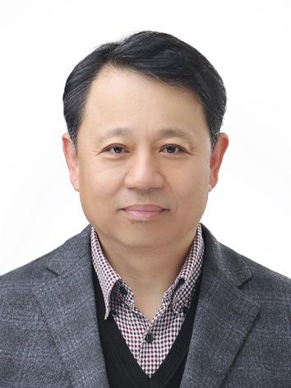 지능형 음성대화 인터페이스 연구실 NLP & Intelligent Spoken Dialogue Systems LabPrincipal Investigator | Myoungwan Koo Website
Machines that model human conversation
An intelligent spoken dialogue system models the conversation between two people and replaces the modelled person with a machine. Building one requires dialogue modelling, dialogue understanding, dialogue generation, speech synthesis and speech recognition to come together as a whole. This laboratory concentrates on dialogue modelling based on reinforcement learning, and on dialogue understanding and speech synthesis using deep neural networks.
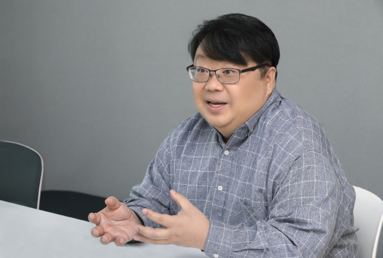 자연어처리 및 대화형 AI 연구실 NLP & ISDS LabPrincipal Investigator | Doosung Chang Website
Reasoning and alignment for Korean foundation models
The Natural Language Processing and Conversational AI Laboratory studies the training and inference of the foundation models that underpin generative AI, and develops optimised training for multimodal agents and technology for commercial use in vertical domains. In reasoning it teaches AI to acquire chains of reasoning for solving problems, so that it produces trustworthy responses and actions, and studies large AI training and inference that supports decisions at an expert level.