

Regular Paper Accepted at the Top International Conference IEEE Conference on Data Engineering (ICDE) 2026
Files

The paper 'Resystance: Unleashing Hidden Performance of Compaction in LSM-trees via eBPF', written by Dr Byun Hong-su (joint first author), master's student Lee Seung-jae (joint first author), Yoo Hong-hyun (combined master's–doctoral), Kim Myoung-jun (master's) and Professor Park Sung-yong (corresponding author) of the Data-Centric AI Computing and Systems Laboratory (DISCOS), has been accepted for publication at the IEEE Conference on Data Engineering (ICDE) 2026.
Storage technology has advanced dramatically over the past few years. The latest NVMe SSDs offer bandwidth of several GB/s and latency on the order of microseconds, overcoming the performance limits of earlier disk hardware. Paradoxically, however, the faster the hardware becomes, the more clearly software inefficiency shows. The bottleneck in storage systems is now shifting from the hardware to the software stack made up of the operating system, the file system and the system call interface.
This structural bottleneck is particularly severe in LSM-tree based NoSQL databases. RocksDB, a representative LSM-tree based key-value store (LSM-KVS), repeatedly performs compaction in the background to maintain high write throughput; through system-call-level analysis this research establishes that compaction accounts for most of the system calls inside an LSM-tree. It shows in particular that the pread() system calls issued while reading numerous data blocks are the core cause of the software stack bottleneck. This demonstrates that in today's high-speed storage environments the limits of the LSM-tree lie not in the hardware but at the systems software boundary between the operating system and the database.
Starting from this awareness of the software stack problem, the research proposes Resystance, which lightens the overhead of the software stack rather than adding new hardware or modifying the structure of the LSM-tree. Using Linux eBPF and io_uring, Resystance moves the core I/O and merge paths of compaction into the kernel, greatly reducing unnecessary user–kernel transitions and system calls. It removes the bottleneck by controlling the kernel's execution path inside the OS while leaving the structure of the existing database engine intact.
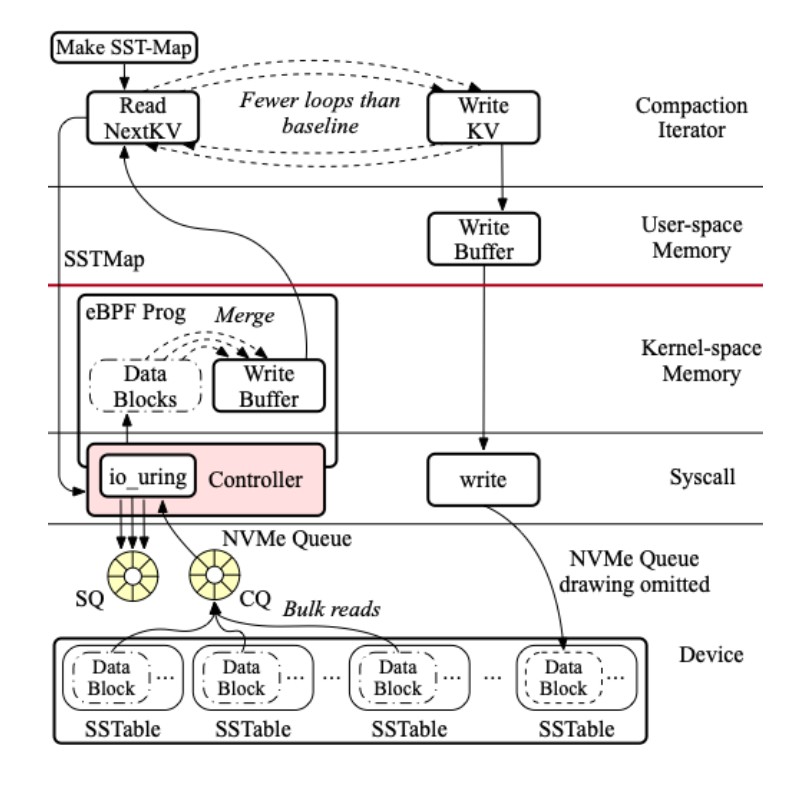
[Figure 1: Architecture overview of Resystance]
In a representative experimental result, Resystance reduced the system calls arising during compaction by 99% on average and shortened compaction time by about 50%. On write-intensive workloads in particular it achieved up to 75% higher throughput and up to 40% lower p99 latency. This is all the more significant as a result obtained purely through systems software optimization, with no additional hardware acceleration.
Foundational technologies such as the OS I/O path, kernel programmable frameworks and the system call structure exert an important influence on the performance of applications including databases. This research shows how important the design of the systems software connecting the operating system and the database becomes as storage devices get faster. The competitiveness of data systems now rests on how the boundary between operating system and database is designed and how precisely software bottlenecks are analysed and removed, rather than simply on adopting faster devices. At this turning point, Resystance is a research result that points to the direction next-generation data infrastructure should take.
Lee Seung-jae, joint first author of the paper and a master's student, said: "With kernel programmable frameworks being actively researched, I think the door has opened wide to applying them in many directions. I am grateful to my laboratory colleagues who worked hard on this research with me and to my supervisor, whose guidance allowed us to complete a good paper."
The IEEE International Conference on Data Engineering (ICDE) is a globally prestigious international conference in data engineering and a venue for sharing the latest research results in database systems, large-scale data management and data-intensive computing. ICDE is listed at an adjusted IF of 3 among the outstanding international conferences in computer science under BK21, and as a top conference in the software field of the Korean Institute of Information Scientists and Engineers. This year it will be held in Montreal, Canada, from 4 to 9 May.