

Regular Paper Accepted at the Outstanding International Conference ACM International Conference on Supercomputing (ICS 2026)
Files

The paper 'ColdMap: Compaction-Aware Cost-Benefit Zone Cleaning for ZNS-Based Key-Value Stores', written by Byeon Seong-jin, master's graduate (joint first author), Min Kyung-wook, master's student (joint first author), Park Jae-wan (master's), Lee Sang-yoon (master's) and Professor Kim Young-jae (corresponding author) of the Data-Centric Computing and AI Systems Laboratory (DISCOS), has been accepted for publication at the ACM International Conference on Supercomputing (ICS 2026). ICS accepts submissions twice a year; in this second round 243 papers were submitted in total, of which 51 were accepted as regular papers (acceptance rate 20.0%)."
The ZNS (Zoned Namespace) SSD is a next-generation SSD that divides storage into zones and permits only sequential writes. It aligns naturally with the append-only write behaviour of LSM-tree based key-value stores, and related research is active. Zone cleaning (ZC), which plays the role of garbage collection in ZNS, however, causes I/O blocking and worsens write amplification, and has been identified as a fundamental performance bottleneck. Various studies on data placement and compaction optimization have sought to resolve this, but they have been limited in that they either fail to eliminate valid data copying entirely or shift the cost of ZC onto compaction.
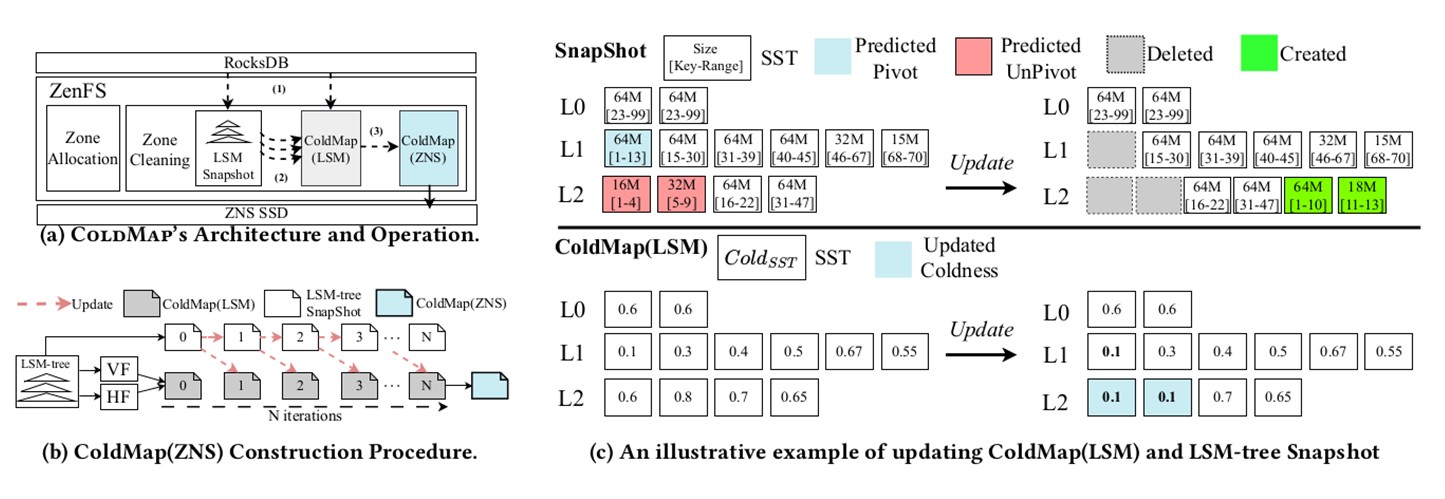
Figure 1. Architecture overview of ColdMap
The research notes that although victim zone selection is the decisive factor in ZC overhead when ZC is unavoidable, it has not been sufficiently addressed. Because data lifetime in an LSM-tree is determined by compaction rather than by access history, the research establishes that existing greedy or history-based cost–benefit approaches lead to inaccurate lifetime prediction. Starting from this problem, the team proposed ColdMap.
When ZC is triggered, ColdMap simulates the compaction behaviour of the LSM-tree to predict the future lifetime of each file, aggregates this as zone-level coldness and uses it for cost–benefit victim selection. The key point is that it fundamentally raises the accuracy of victim selection without modifying the compaction policy or data placement.
In the experiments, ColdMap reduced the amount of data copied during ZC by up to 49% compared with existing techniques and improved overall throughput by an average of 15.7%. It showed consistent improvements under different compaction policies, demonstrating its general applicability.
Min Kyung-wook, joint first author of the paper and a master's student, said: "Victim selection for ZC in LSM-ZNS environments has been an unexplored problem. Noting that existing greedy and history-based approaches do not reflect the compaction characteristics of the LSM-tree, we were the first to present a new direction that predicts future lifetime through compaction simulation. I am grateful to Professor Kim Young-jae for his guidance and to my laboratory colleagues who worked on this research with me."
The ACM International Conference on Supercomputing (ICS) is a world-class international conference in high-performance computing systems and a prestigious venue for sharing the latest results in processor and memory architecture, compilers and runtime systems, parallel algorithms, and storage and systems software research. This year it will be held in Belfast, United Kingdom, from 6 to 9 July.
References:
- The 2026 International Conference on Supercomputing (ICS`2026)
- Website : https://ics2026.github.io/