

Regular Paper Accepted at the Outstanding International Conference IEEE International Conference on Cloud Computing (CLOUD) 2026
Files


The paper 'CODA: Breaking CPU Bottlenecks for Scalable Ceph with DPU-Based OSD Decoupling', written by doctoral student Park Gyu-ri (first author), master's student Yoon Sung-min, Dr Awais Khan, Professor Park Sung-yong (corresponding author) and Professor Kim Young-jae (corresponding author) of the Data-Centric AI Computing and Systems Laboratory (DISCOS), has been accepted for publication at the IEEE International Conference on Cloud Computing (IEEE CLOUD) 2026.
Cloud infrastructure is expanding beyond large data centres to edge clouds and small clusters, and operating high-performance storage within limited CPU resources has become an important challenge. The latest NVMe SSDs offer bandwidth of several GB/s, but in distributed storage systems the software stack that handles them and the CPU — rather than the storage device — are emerging as the new bottleneck.
This research analyses the CPU bottleneck of the OSD (Object Storage Daemon) in Ceph, a representative distributed storage system. The analysis found that the cost of message handling, replication coordination and transaction processing performed in the Messenger and the OSD Core accounts for most of the CPU usage, more than BlueStore, which handles the actual disk I/O. As the number of OSDs grows in particular, this application-level processing cost accumulates and the host CPU saturates quickly, so the performance of the NVMe SSD cannot be fully exploited.
To resolve this, the research proposes CODA, a Ceph OSD decoupling architecture. CODA separates the Ceph OSD into a front-end path that runs on the DPU and a persistence backend that remains on the host. That is, the CPU-heavy Messenger and OSD Core are offloaded to the DPU while BlueStore, directly connected to the NVMe device, remains on the host, so that the host CPU can concentrate on storage I/O.
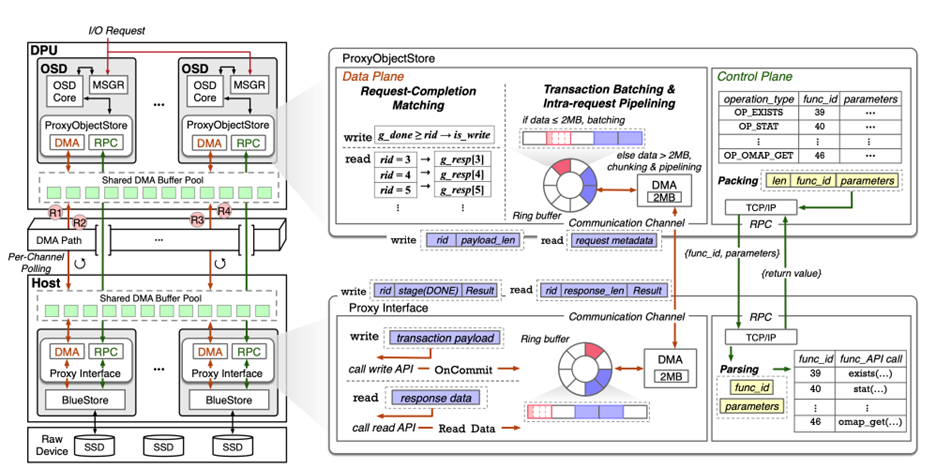
[Figure 1: Architecture overview of CODA]
CODA designs three core techniques to realize the decoupled OSD structure. First, Flow-Direct provides a cross-boundary transaction path between DPU and host. The ProxyObjectStore on the DPU side intercepts the OSD's backend calls, delivering bulk I/O over a DMA-based data plane and metadata and control operations over a lightweight RPC-based control plane. Second, Flow-Adapt alleviates the fixed cost of DPU–host DMA transfers and the 2MB transfer size limit. Small transactions are batched into a single DMA, while large requests use chunking and intra-request pipelining to reduce the performance loss caused by DMA constraints. Third, Flow-Sync applies per-channel polling and lock-free request-completion matching to reduce the completion handling and synchronization costs that grow when many OSDs run simultaneously.
In a representative experimental result, CODA reduced host CPU usage by up to 88% on a Ceph cluster equipped with NVIDIA BlueField-3 DPUs. It also achieved up to 49% higher throughput than existing Ceph without replication and up to 94% higher throughput with 3-way replication. Even with the number of OSDs increased to eight, the all-CODA configuration achieved 37% higher throughput than the all-baseline configuration, and a hybrid placement configuration using host OSDs and DPU OSDs together showed up to 71% higher throughput.
The research is significant in using the DPU not as a simple network accelerator but as an independent execution platform that runs the application-level execution path of a distributed storage system. CODA in particular effectively saves host CPU resources by separating the OSD front-end logic, where the CPU bottleneck concentrates, onto the DPU while maintaining Ceph's existing consistency and replication semantics. This shows that in the era of high-speed NVMe SSDs the performance limits of distributed storage systems lie in the software path and CPU resource management rather than in the storage device, and points to an important direction for the design of future DPU-based storage systems.
Park Gyu-ri, the paper's first author and a doctoral student, said: "I believe that fully exploiting the performance of the latest NVMe SSDs requires not just adopting faster devices but precisely analysing and restructuring how the storage software stack uses the CPU. In this research we analysed the bottleneck of the Ceph OSD from the perspective of application-level logic and sought to resolve it with a DPU-based decoupled execution structure. I am grateful to my co-researchers and supervisors who worked on this with me."
The IEEE International Conference on Cloud Computing (IEEE CLOUD) is one of the main conferences of the IEEE World Congress on SERVICES and an international conference for sharing the latest research results in cloud computing, distributed systems, cloud infrastructure and services computing. This paper will be presented at the 2026 IEEE World Congress on SERVICES (SERVICES 2026), held in Sydney, Australia, from 13 to 18 July 2026.