

Regular Paper Accepted at the Outstanding International Conference IEEE International Conference on Cloud Computing (CLOUD) 2026
Files

The paper 'DITTO: Online Memory Rightsizing and Value-Aware Eviction for Reducing Cold Starts in Serverless Platforms', written by Lee Dong-jae, master's graduate (joint first author), doctoral student Park Gyu-ri (joint first author), Dr Jung Yeon-woo, Dr Byun Hong-su (corresponding author) and Professor Park Sung-yong (corresponding author) of the Data-Centric AI Computing and Systems Laboratory (DISCOS), has been accepted for publication at the IEEE International Conference on Cloud Computing (IEEE CLOUD) 2026.
Serverless computing is a cloud-native execution model in which the user deploys function-level programs without managing servers directly and the platform creates and runs containers in response to requests. When a request arrives and no reusable warm container is available, however, a new container must be created and initialized, and this cold start causes considerable latency.
The research analyses memory over-provisioning and the limits of existing eviction policies as the main causes of increased cold starts on serverless platforms. Users often set memory limits higher than actual usage to avoid OOM, but such static memory limits occupy the warm pool's memory budget regardless of actual usage. As a result the number of warm containers that can be maintained falls, and pool saturation causes frequent eviction and cold starts. Existing LRU-based eviction policies also fail to take account of the differing cold-start penalties of each function, which can lead to the inefficiency of evicting containers whose warm reuse benefit is greatest.
To resolve this, the research proposes DITTO. DITTO is a system that combines online memory rightsizing with value-aware container management to keep more high-value warm containers within a limited memory budget. It dynamically adjusts memory limits to match a container's actual memory usage and decides which containers to keep or evict by considering cold-start sensitivity together with memory footprint.
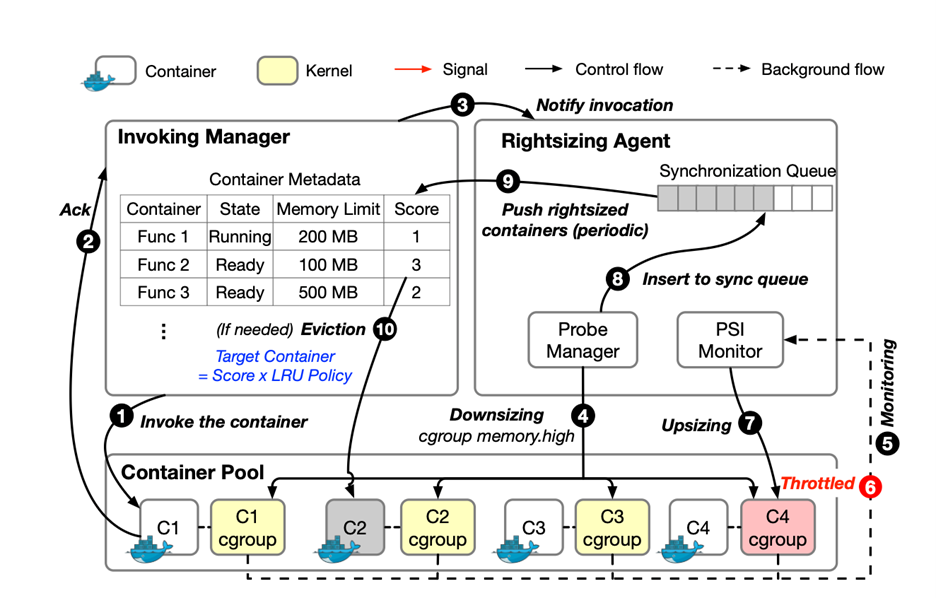
[Figure 1: Architecture overview of DITTO]
DITTO consists of an Invoking Manager, a Rightsizing Agent and a Container Pool. Using memory.high and memory pressure signals from Linux cgroup v2, the Rightsizing Agent gradually reduces a container's memory limit and upsizes immediately when throttling is detected, preventing OOM and performance degradation. Through the DITTO Score it also preferentially preserves containers whose latency reduction per unit of memory is greatest, simultaneously improving the memory efficiency of the warm pool and the reduction in cold starts.
In a representative experimental result, DITTO was implemented in Apache OpenWhisk and evaluated on a range of serverless workloads. It reduced the cold-start rate by up to 25.7% and improved end-to-end latency by up to 33.3% compared with vanilla OpenWhisk. Compared with RainbowCake, existing work on cold-start optimization, it further reduced the cold-start rate by up to 14.8% and latency by up to 19.4%.
Lee Dong-jae, joint first author of the paper and a master's graduate, said: "Cold starts on serverless platforms are not simply a matter of container initialization cost; they are closely tied to which containers are kept, and how efficiently, within limited memory. I find it meaningful to have been able to show that this matters for improving the performance of serverless systems."
The IEEE International Conference on Cloud Computing (IEEE CLOUD) is one of the main conferences of the IEEE World Congress on SERVICES and an international conference for sharing the latest research results in cloud computing, serverless computing, distributed systems and cloud infrastructure. This paper will be presented at the 2026 IEEE World Congress on SERVICES (SERVICES 2026), held in Sydney, Australia, from 13 to 18 July 2026.