

Paper Accepted by IEEE Transactions on Computer-Aided Design of Integrated Circuits and Systems (IEEE TCAD)
Files

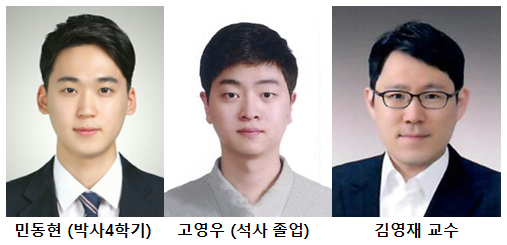
Paper accepted by IEEE Transactions on Computer-Aided Design of Integrated Circuits and Systems, the most prestigious international journal in computer-aided system design (First author: Min Dong-hyun; corresponding author: Professor Kim Young-jae)
A paper titled 'A Content-based Ransomware Detection and Backup Solid-State Drive for Ransomware Defense', written by graduate student Min Dong-hyun of the Department of Computer Science & Engineering (doctoral, 4th semester; supervisor: Professor Kim Young-jae), has been accepted for publication in IEEE Transactions on Computer-Aided Design of Integrated Circuits and Systems (IEEE TCAD).
The research proposes automatic ransomware detection together with backup and recovery technology to defend against ransomware data tampering attacks in solid-state drive environments. Existing disk-level ransomware defence techniques relied solely on detection based on ransomware behaviour patterns. By contrast, the proposed technique guarantees excellent ransomware detection accuracy using several detection techniques based on changes in data content together with machine learning. In particular, the research proposes a hardware design that executes the detection technique rapidly and a software design that manages backup data efficiently. Through this, the proposed technique not only detects ransomware very accurately but also substantially mitigates the disk overhead arising from detection and efficient backup.
The paper evaluates detection accuracy between recent research using detection techniques that rely only on ransomware behaviour patterns and the proposed technique with content-change-based detection. Existing detection techniques showed a detection failure rate of at least 2% and up to 13%, whereas the proposed technique showed a detection error rate of only 0.19% to 0.43%, guaranteeing a high detection success rate.
*This research was carried out with the support of Samsung semiconductor research.