

RESEARCH
Graphics, Multimedia & Interactive Computing
"Creating the virtual, reproducing the real"
This area deals at once with how computers create visual and auditory information and how they read it. Rendering a 3D scene photorealistically and reconstructing a 3D world from captured images are two sides of the same physics.
 컴퓨터 그래픽스 연구실 Computer Graphics LabPrincipal Investigator | Insung Ihm Website
Real-time rendering and VR/AR
The Computer Graphics Laboratory studies theory and applied technology for solving problems across computer graphics, including geometric modelling, animation and rendering. Recently it has concentrated on realistic real-time rendering for PC and mobile platforms, and on building three-dimensional scenes effectively from RGB-D images captured by camera. On that real-time graphics foundation it produces VR, AR and MR application software for a range of industries. It also studies parallel algorithms and implementation techniques for handling large volumes of visual information, developing high-performance parallel software on PC and mobile platforms with the CUDA and OpenCL APIs.
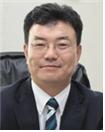 멀티미디어시스템 연구실 Multimedia Systems LabPrincipal Investigator | Jongho Nang Website
Analysing and retrieving images, video and music
The Multimedia Systems Laboratory analyses the information embedded in images, video, sound and music at both the signal level and the semantic level, and on that basis studies retrieval methods for applications such as photo, video and music search. Building on multimedia analysis that uses deep learning to recognise people, places and objects and to detect similar images, it develops a range of application systems. Editing, searching and browsing multimedia data efficiently on embedded systems with limited CPU and memory is another important subject. More recently the laboratory has extended into visualisation and anomaly detection for blockchain data.
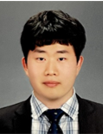 시각 컴퓨팅 연구실 Visual Computing LabPrincipal Investigator | Jooho Lee Website
Computing the physics between light, objects and cameras
Visual computing is the study of the interaction between light sources, three-dimensional objects and cameras. Computer graphics is given visual data in many forms - images, three-dimensional geometry, reflectance - and the representation chosen determines the fidelity, distribution and processing speed of that data. This laboratory models such representations, applies them to real problems and comes to understand their reach and their limits. In three-dimensional appearance reconstruction it aims to recover geometry and reflectance from images taken with an ordinary phone or RGB-D camera, combining geometric representation, reflectance modelling, differentiable rendering and machine learning. In real-time three-dimensional geometry and texture reconstruction it updates the geometry and texture of a scene as new captured images arrive.