

RESEARCH
Networks & Software Systems
"Connecting the world and keeping it running"
The more computing scatters across cloud and edge, mobile devices and the internet of things, the more two old questions matter again: how do we connect it, and how do we build it properly? This area takes on both at once.
 블록체인 및 소프트웨어 엔지니어링 연구실 Blockchain & Software Engineering (BASE) LabPrincipal Investigator | Sooyong Park Website
How to build software well, and blockchain
The Blockchain and Software Engineering Laboratory treats the software development process itself as an engineering subject. In blockchain applications it accounts for the variety of platforms and forms that each domain calls for, proposes methodologies running from requirements analysis through design, implementation and verification, and researches new technology built on them. In requirements engineering it studies an engineering approach to every activity and principle involved in eliciting, analysing, describing, managing, verifying and maintaining requirements. In adaptive software it addresses techniques by which software monitors and analyses its own behaviour and environment, judges when change or redeployment is needed, and adapts, covering dynamic analysis, monitoring, fault detection and model generation. Process tailoring and dynamic product lines round out the work.
 네트워크 연구실 Network LabPrincipal Investigator | Seungwook Kim Website
Solving network resource problems with game theory
Game theory analyses mathematically how competing parties should rationally decide on a best strategy that serves their own interest while taking the other side into account. This laboratory brings that theory to real network problems such as congestion control, routing, power control and pricing. It studies efficient resource management for the many forms of data communication in cellular networks, wireless internet and sensor networks, together with real-time network management that shares and uses limited resources adaptively. It also works on online algorithms, which must decide optimally from the information available at the moment, and on communication techniques that guarantee QoS in multimedia services where several traffic types coexist.
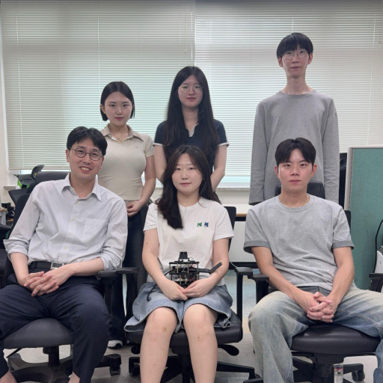 지능형연결시스템 연구실 Intelligent Connected Systems LabPrincipal Investigator | Jungmin So Website
Next-generation wireless networks, intelligent sensing and on-device AI
The wireless environment ahead is growing more complex as 5G and 6G mobile communications, wireless LANs and the IoT coexist, network density and traffic rise, high-frequency bands come into use, and quality requirements diverge by service. This laboratory studies handover, multi-connectivity, resource allocation and traffic management for 5G and 6G networks, and uses artificial intelligence to optimise network protocols and system performance. It also develops intelligent sensing: precise indoor and outdoor localisation from wireless signals and sensor data, Wi-Fi SLAM, trajectory tracking and signal-based context awareness. Beyond that it researches model compression, mixed-precision quantisation, knowledge distillation and on-device inference so that large speech and language models run efficiently on mobile and edge devices.
 로보틱스·AI 산학 실증 Robotics & AI LabPrincipal Investigator | Jinho Son
Networks and robots, research proven in the field
Grounded academically in the design of routing protocols for ad-hoc networks, this work verifies how robotics and artificial intelligence actually behave in the field. Because it centres on industry-academia cooperation, its subjects generally begin with problems that companies and local governments actually face. Linked to the undergraduate capstone design course, students are guided to explore for themselves how robotics and AI can be applied on site; one supervised team won the grand prize at the 2025 Seocho AI and Robot Public Service Competition. Staged verification and field deployment will continue through collaboration with local governments and corporate robotics groups.